
There are 2 types of system requirements:
- Functional requirements (FR).
- Non-functional requirements (NFR).
Festina Lente
There are 2 types of system requirements:
The Locust is an alternate tool to the JMeter. Locust allow you to write load tests in python, this tutorial describes how from scratch make a simple load testing and see results. Let’s do the following steps:

Please pay attention to the output url: http://0.0.0.0:8089, please adjust the address to the next: http://localhost:8089, (as the IP-format may not work) and paste to the browser, you should see the next:
Continue reading “Locust as a modern load testing framework”1. Copy a file from the App_Data/logs/ path of the default/cm-5c57dbd5d5-pqwh9 pod into the local C:/myf/log.txt file:
kubectl cp default/cm-5c57dbd5d5-pqwh9:App_Data/logs/log.20201215.092051.txt /myf/log.txt
2. Copy the Sitecore.ContentTesting.dll file from the local machine into the pod with path bin/Sitecore.ContentTesting.dll
kubectl cp C:\Work\Solutions\CT\code\Sitecore.ContentTesting\bin\Debug\Sitecore.ContentTesting.dll default/cm-5c57dbd5d5-pqwh9:.\bin\Sitecore.ContentTesting.dll
3. Copy all the files from the App_Data/logs/ path into the local C:/myf/:
kubectl cp default/cm-5c57dbd5d5-pqwh9:App_Data/logs/ /myf/
Note for the #3: please check that all the files are copied, in my case some of them were missed somehow, if you know why it may happens please let me know, thank you in advance!
Let’s say we have a simple smart contract MemoryToken, it can be even a stub which has only 1 field name.
pragma solidity ^0.5.0;

contract MemoryToken {
    string public name = "Memory token";
}

This post is to show how similar every technology to each other. If you experienced with NUnit, XUnit, Jasmine, Protractor, etc., you can easily figure out how to write unit-tests for blockchain smart-contracts using the Truffle tool which under the hood is NodeJS.
Continue reading “Unit-tests for blockchain smart contracts with Truffle”The Netlify service allows you not only to deploy Jamstack apps, but also do split testing, meaning that can show to users different variations of the same page. The approach they provide is quite interesting and different from common software practices. I would say it’s even more related to configuration.
Let’s say we have simple JAMstack website. To use the split-testing approach we should have the source code in Bitbucket, Github or Gitlab. Make sure your latest changes is in the master branch.
Then login to the Netlify account, go to the Team overview tab and click the New site from Git.

Then do 3 simple steps which take less than a minute and you should have connected repository to the Netlify.
Continue reading “Netlify Split Testing”
For the last few days I’ve noticed weird behavior in Sitecore instances which are related to Solr, for example:
For all of this things I haven’t pay much attention to start troubleshooting, because I’m working in another area which not related to indexes, the behaviour is quite new for me and just simple reboot has helped.

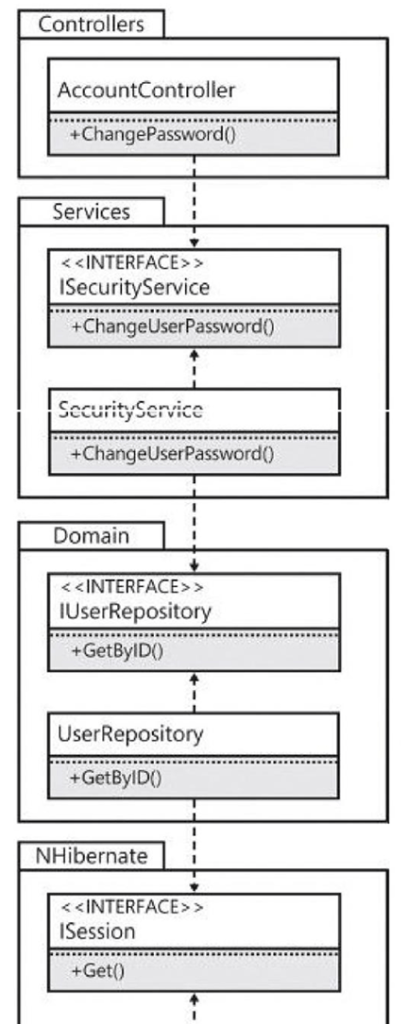
The Entourage anti-pattern brings no needed dependency. In this example if we build project with Controllers in isolation, the bin folder going to have the NHibirnate assembly as implicit dependency. With the current implementation the services, domain, NHibernate, etc. classes must be public, hence developer able to create any of them manually with constructor usage and this is unwilling situation.
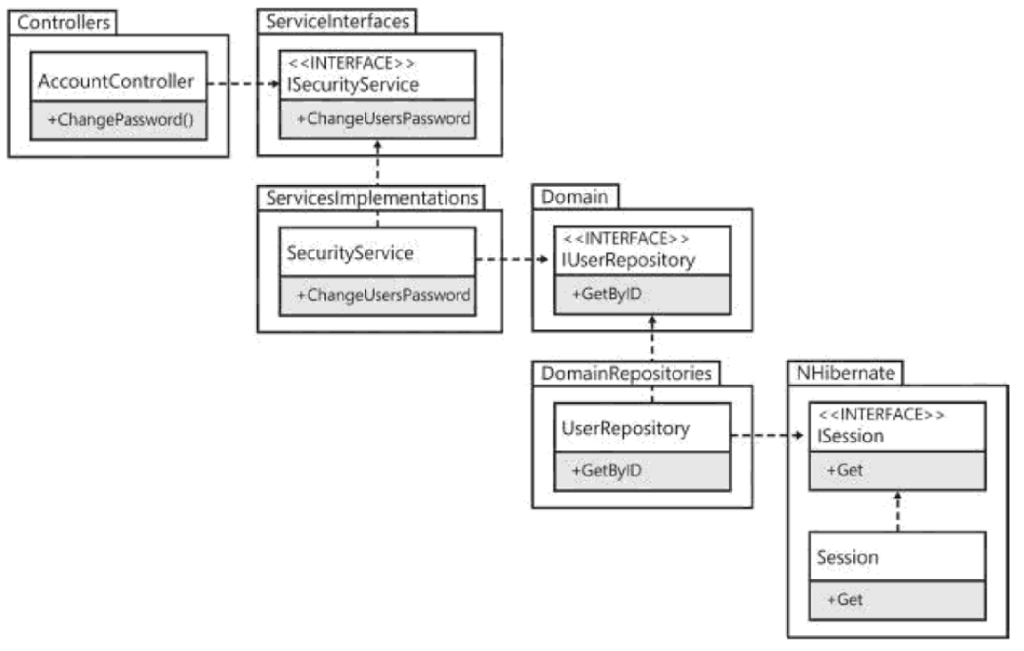
The Stairway pattern is fix the entourage anti-pattern. The interface and implementation should be separated from each other in different assemblies. Hence, with this approach we easily can replace implementations.
Code implementation which potentially decrease code coverage in your code or makes it hard to test:
Approaches which help to test your code better:
Good code is following 3 main concepts:
 Ivan's Blog