English Article · Software

Sitecore Stream for PDXP – Content Extraction

In the new release, Sitecore introduced a brand-new feature – Content Extraction that can help extract data from various input sources, including files, URLs, or plain text. The latest package is version 1.3.23.

In my demo I’ll have 2 parts: preparation and execution.

Preparation

Let’s say we have a store of Powerful bars/gels, there can be lots of different products with different flavors, usage, package sizes, and so on. Hence for this kind of items (products) a template is needed:

Then we need a document, as for now it’s supported the next file formats: PDF, TXT, JPG, JPEG, PNG.

As an example, please refer to the following screenshot; in my case, it’s a PDF document. In real life, you might have a multipage document, but just be aware that the limit is 3MB and the maximum number of pages should be up to 30.

Continue reading “Sitecore Stream for PDXP – Content Extraction” →
English Article · Software

Sitecore Stream for PDXP – Site Item Translation

Sitecore just released a new version of the Stream module for PDXP. Now, the package is available for download, and it is version 1.2.45.

(to download the latest version, open the Stream app in the Sitecore Cloud, and under the Helpful Links, click the Sitecore Stream for Platform DXP)

The main feature in this release is Site Item Translation. You can use this feature to create or update language versions of site items directly in the Content Editor.

The feature supports the 3 types of fields:

  1. Single-Line Text.
  2. Multi-Line Text.
  3. Rich Text.

Now, when you navigate to the item that doesn’t have a version in a particular language (e.g., French), you will see the new message – Add a new version with Stream Translate:

In the new dialog, you’ll see a list of the fields that are available for translation. Select all fields or only the necessary ones.

Continue reading “Sitecore Stream for PDXP – Site Item Translation” →
English Article · Software

Sitecore Stream for PDXP April Update 2025 – Brand Kits and Multiple Content Variants

The new version of the Stream for PDXP has two exciting new features:

  1. Brand Kits – user can generate content in context of a selected Brand.
  2. Multiple Content Variants – users can select the number of variants to be generated in one request.
Continue reading “Sitecore Stream for PDXP April Update 2025 – Brand Kits and Multiple Content Variants” →
English Article · Software

Sitecore Stream for Platform DXP March Update 2025

Last month Sitecore released the Sitecore Stream for PDXP, and today the new update is available and it’s highly recommended for update because it simplifies installation and brings various bug fixes and UX improvements. Follow the official documentation to learn more.

The release including:

  • Bug Fixes: addressed minor issues to enhance overall stability and performance.

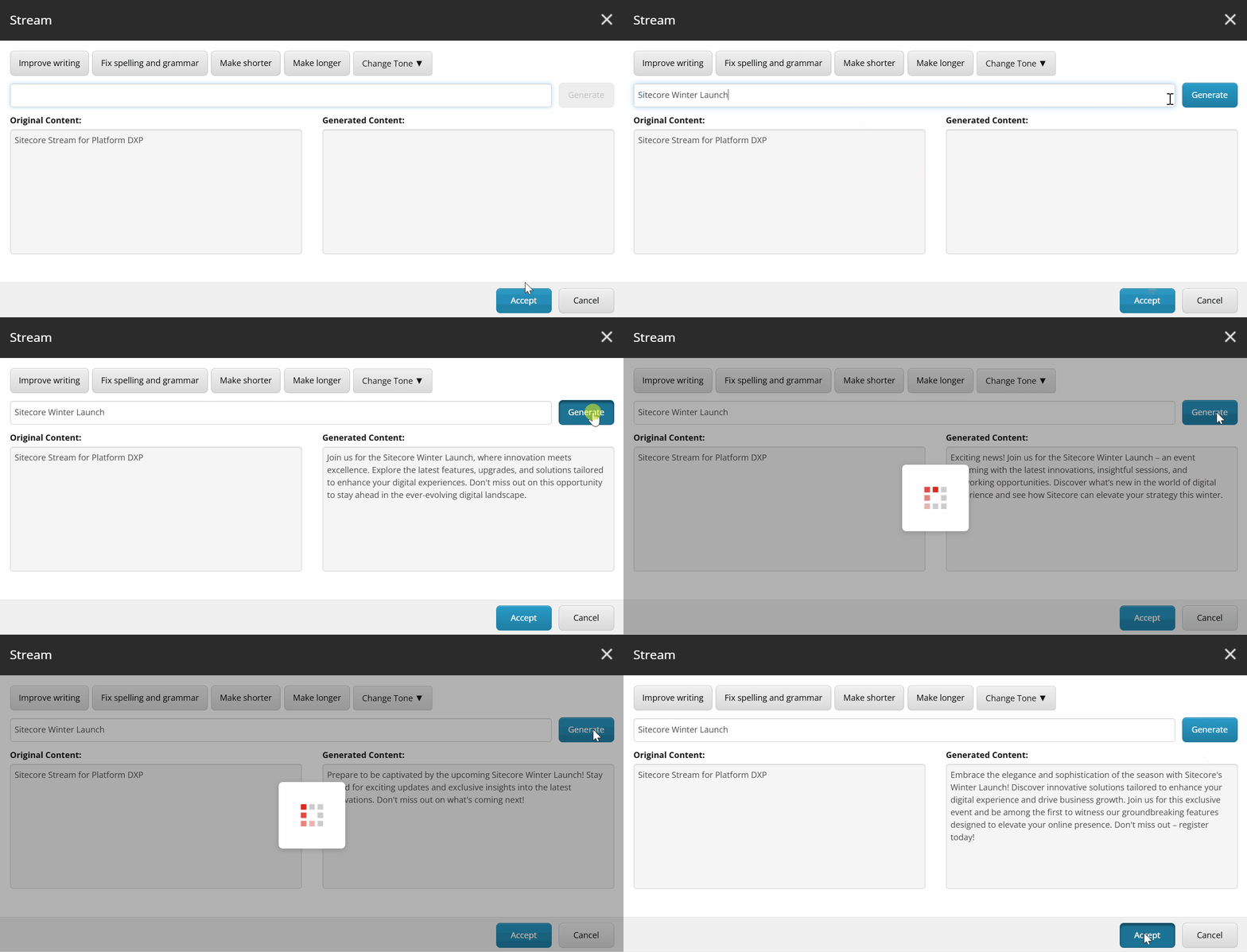
You can use prompts to work with the original content, for example, ask to remove tags, translate, or anything else.

Continue reading “Sitecore Stream for Platform DXP March Update 2025” →
English Article · Software

Sitecore XM Migration Tool v2.1 (October 2024)

Last year, I wrote the Sitecore XM to XM Cloud Content Migration article about the brand-new tool from Sitecore that helps to migrate content, media and users to XM Cloud. Now, I would like to share what is new in the just-released XM to XM Cloud Tool v2.1.

Agenda

  1. Where to get?
  2. What’s new?
  3. XMM V1 or V2?
  4. Updates in GUI.
  5. What should I know about new configuration?
  6. Support.
Continue reading “Sitecore XM Migration Tool v2.1 (October 2024)” →
Architecture

Steps in Architecting Solution Delivery and Maintenance Lifecycle

  1. Define the customer requirements for the solution.
  2. Design a great solution to meet those requirements.
  3. Implement the designed solution.
  4. Test the solution implementation.
  5. Validate the solution with the customer.
  6. Deliver the solution in the working environment.
  7. Maintain the solution afterward.

Fundamental constraints

  1. The solution needs to meet user requirements.
  2. The solution needs to be delivered on time.
  3. The solution needs to adhere to the project budget.
  4. The solution needs to deliver good quality.
  5. The solution needs to guarantee safe and effective future evolution.
English Article · Software

Sitecore XM to XM Cloud Content Migration

Agenda:

  1. Introduction
  2. What does this tool do?
  3. What does the tool look like?
  4. What ZIP file contain?
  5. Prerequisites
  6. Sitecore XM Migration GUI
  7. Sitecore XM Migration Console

Sitecore has lots of customers who developed their solution based on classic Sitecore OnPrem which exists in the market for 2 decades. Also, Sitecore released the XM Cloud, a fully SaaS solution in July 2022.

Lots of customers continue to use the OnPrem solutions, new customers prefer to use the SaaS version and of course, some would like to switch to it, but it requires lots of effort. Sitecore just released to the public a brand-new XM to XM Cloud Content Migration tool that assists in minimizing the account’s barriers to migrating to Composable DXP.

What does this tool do?

It helps migrate customers’ data from the source of the XM OnPrem instance to the XM Cloud account. It migrates the content, media, and internal users (but not custom site data at this moment).

Continue reading “Sitecore XM to XM Cloud Content Migration” →
Uncategorized

Soft Skills – Building Trust

“Trust is like the air breathe – when it’s present, nobody really notices; when it’s absent, everybody notices.” – Warren Buffett

Trust is a risk. Big ambitions in life require collaboration and can’t do it alone. So to minimize the risk, people try really hard to gauge the trustworthiness of others.

Trustworthiness is evaluated on three primary criteria:

  1. Competency – when an absolute expert in a field.
  2. Empathy – when people see you as warm, caring, and understanding.
  3. Authenticity – when people perceive you as honest, transparent, genuine, and consistent.
Continue reading “Soft Skills – Building Trust” →
Architecture

Event Driven Architecture – Full Guide

Agenda:

  1. Microservices Architecture
  2. Command and Query
  3. Event
  4. Event-Driven Architecture (EDA)
  5. Producer
  6. Channel
  7. Consumer
  8. Advantages of Event-Driven Architecture
  9. Orchestration and Choreography
  10. Event Sourcing Pattern
  11. CQRS Pattern
  12. When to use Event Sourcing and CQRS
  13. Stateless EDA
  14. Stateful EDA
  15. Event Streaming
  16. Correlation Id
  17. Mixing EDA with Request/Response
  18. Events as Source of Truth
  19. The Saga Pattern

1. Microservices Architecture

  • Based on loosely coupled services.
  • Each service is in its own process.
  • Lightweight communication protocols.
  • Polyglot – no platform dependency between services.

Replaces 2 legacy architectures as Monolith and SOA (Service Oriented Architecture).

The most important part in the EDA is the microservices communication. Which is dictated performance, and scalability. So the Event Driven Architecture handles the communication part.

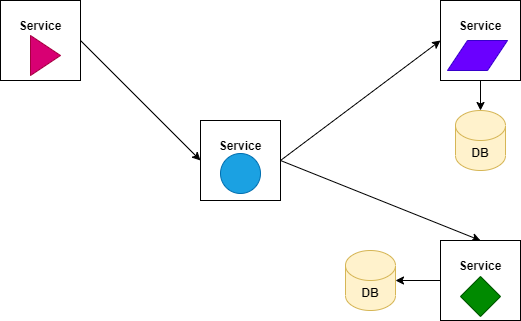
Typical Microservices Architecture
Continue reading “Event Driven Architecture – Full Guide” →